%20{%20:root%20{%20--deepread-stroke:%20%23E5E7EB;%20}%20}%20.dark%20{%20--deepread-stroke:%20%23E5E7EB;%20}%20%3c/style%3e%3crect%20x='40'%20y='30'%20width='220'%20height='260'%20rx='28'%20ry='28'%20stroke='var(--deepread-stroke)'%20stroke-width='16'%20fill='none'/%3e%3cpath%20d='M180%2030v52c0%2010%208%2018%2018%2018h62'%20stroke='var(--deepread-stroke)'%20stroke-width='16'%20fill='none'/%3e%3cline%20x1='70'%20y1='130'%20x2='200'%20y2='130'%20stroke='var(--deepread-stroke)'%20stroke-width='16'%20stroke-linecap='round'/%3e%3cline%20x1='70'%20y1='165'%20x2='200'%20y2='165'%20stroke='var(--deepread-stroke)'%20stroke-width='16'%20stroke-linecap='round'/%3e%3cline%20x1='70'%20y1='200'%20x2='170'%20y2='200'%20stroke='var(--deepread-stroke)'%20stroke-width='16'%20stroke-linecap='round'/%3e%3c!--%20green%20download%20arrow%20in%20bottom%20right%20corner%20--%3e%3cpath%20d='M210%20202v58'%20stroke='var(--deepread-accent)'%20stroke-width='18'%20stroke-linecap='round'/%3e%3cpath%20d='M195%20245l15%2015%2015-15'%20fill='none'%20stroke='var(--deepread-accent)'%20stroke-width='18'%20stroke-linecap='round'%20stroke-linejoin='round'/%3e%3c/svg%3e)
Document Automation for Utility Companies (2026)
Document automation for utility companies — vegetation management, HITL review, regulatory compliance, and named platforms compared.
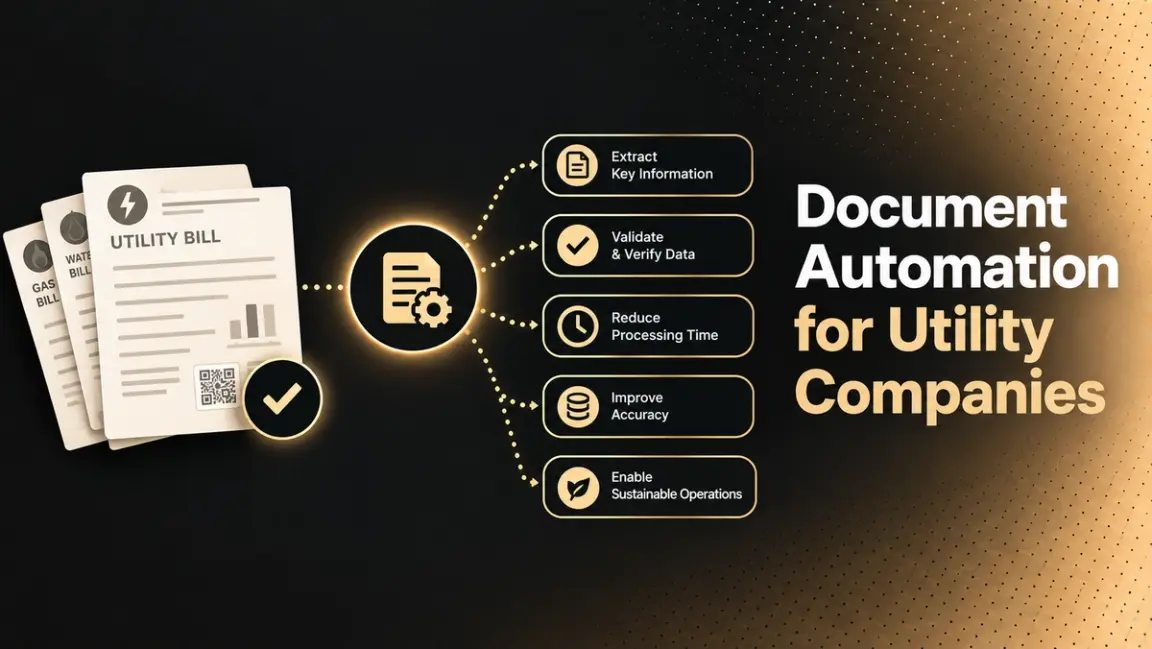
Utility companies generate documentation with a distinct characteristic most general business document automation doesn't account for: the stakes are often safety-critical and regulatory-consequential, not just administrative. A vegetation management risk score that's wrong doesn't just create rework; it can contribute to a wildfire. A right-of-way encroachment that goes undetected is a compliance failure with real penalty exposure. This is a guide to what document automation actually covers for utilities specifically, why human oversight matters more here than in most industries, and named platforms addressing this space.
Who This Is For
- Utility operations and vegetation management teams managing inspection cycles, work orders, and compliance documentation across thousands of miles of infrastructure.
- Regulatory and compliance officers needing documentation that holds up as defensible evidence during a rate case or regulatory review.
- Field service and asset management leaders tracking equipment lifecycles (generators, transformers, meters) alongside safety and inspection records.
- Finance and AP teams processing vendor and contractor invoices at the volume utility operations generate.
Utility-Specific Document Types
- Vegetation management and right-of-way documentation. Inspection records, hazard assessments, work packets, landowner communication logs, and encroachment reports, generated across corridors spanning thousands of miles and often dozens of jurisdictions.
- Work orders. Field crew assignments and completion records, increasingly captured digitally with photos, GPS location, notes, and signatures rather than paper.
- Equipment lifecycle documentation. Records for generators, transformers, meters, and distribution equipment, including warranty tracking, maintenance history, and performance data.
- Safety and regulatory inspection records. Mandatory safety checks and regulatory inspections, typically captured through standardized digital forms tied to specific compliance requirements.
- Regulatory filings and rate case evidence. Compliance packages and reports submitted to regulators, which need to be defensible and auditable, not just complete.
- Vendor and contractor invoices. A genuinely high-volume category given how much utility field work (vegetation management, equipment maintenance) is contracted out rather than performed entirely in-house.
How Does Document Automation Work?
Regardless of industry, document automation runs through a consistent sequence of stages:
- Capture. Documents enter the system from wherever they originate: a field crew's mobile app, a scanned form, an uploaded PDF, or a photograph taken on-site.
- Classification. The system identifies what type of document it's looking at (a work order, an inspection report, a vendor invoice) before deciding how to process it.
- Extraction. Structured data is pulled from the document- fields, values, dates, signatures- rather than requiring someone to manually key it into a system.
- Validation. Extracted data is checked against expected values or business rules, catching inconsistencies before they propagate downstream.
- Human-in-the-loop exception handling. Uncertain or flagged cases route to a person for review, rather than being processed automatically with no oversight or blocking the entire workflow until manually cleared. This step matters enough for utilities specifically that it gets its own detailed treatment below.
- Integration and export. Validated data flows into downstream systems, an asset management platform, a compliance reporting tool, and an accounting system, without requiring manual re-entry.
This is the same underlying pipeline whether the document is a vegetation inspection report or a vendor invoice; what changes by use case is which steps carry the most risk and need the most human oversight.
Top Problems Solved by Document Automation
- Manual data entry errors. Re-keying information from paper or scanned forms is slow and error-prone; automated extraction removes this step entirely for routine, high-confidence cases.
- Slow processing and operational bottlenecks. Work orders, inspection reports, and compliance filings that sit in a manual review queue delay field operations and regulatory response times.
- Misfiled or lost documentation. Paper-based or inconsistently organized digital records make it genuinely difficult to locate a specific inspection report or compliance record when it's needed, particularly months or years later during an audit.
- Inconsistent compliance documentation. Manual reporting varies by who's filling it out and when, creating gaps that undermine a utility's ability to demonstrate a consistent, defensible program to regulators.
- High labor cost at scale. Manually processing documentation across thousands of miles of infrastructure and dozens of jurisdictions requires proportionally more staff as volume grows; automation breaks that linear relationship.
- Weak audit trails. Reconstructing what happened, when, and why after the fact is far harder with manual records than with structured data captured at the point of work.
Why This Is a Genuinely Large Category, and Why It Matters
Vegetation management alone is the single largest operating expense most electric utilities carry, and it's precisely the category where document automation has the most direct safety and financial consequence.
- Getting it wrong contributes to real operational risk. An inaccurate vegetation risk score isn't just a data error; it can directly contribute to wildfire risk.
- Getting the documentation wrong undermines regulatory standing. Poor or inconsistent documentation weakens a utility's ability to demonstrate a risk-based, equitable program to regulators, even when the underlying fieldwork was done correctly.
- This reframes the whole category. Document automation for utilities isn't primarily about administrative efficiency; it's genuine operational risk management with financial and safety consequences attached.
Separately, one industry source reports that a significant majority of energy and utility companies still relied on manual processes as recently as 2025, including paper invoice entry and manual data scanning. Worth treating as a directional industry signal rather than a precisely verified figure, but consistent with how document-heavy and manually driven this sector has remained relative to others.
Why Human-in-the-Loop Matters More Here Than in Most Industries
Human-in-the-loop (HITL) review is a general document automation principle, but it carries specific, elevated stakes for utilities worth naming directly.
- Automated decisions here have safety consequences, not just accuracy consequences. A wrong vegetation risk score or an undetected right-of-way encroachment carries real wildfire and compliance risk, distinct from a typical business document error.
- "Perfect documentation of a wrong decision" isn't a defensible regulatory strategy. Documenting an automated process thoroughly doesn't help if the underlying decision was biased or incorrect, and a regulator reviewing it will look past the paperwork to the decision itself.
- The fix is an "AI-assisted, human-approved" workflow, not full automation. Engineers and vegetation managers review, adjust, and approve automated risk scores before they become active work orders, capturing local context (municipal tree ordinances, equity considerations, professional judgment) alongside the underlying data, rather than letting the algorithm's output stand alone.
- The mechanical implementation is confidence-threshold routing. Extracted or scored data below a confidence threshold routes automatically to a human reviewer, while high-confidence results proceed without manual intervention. One documented implementation pushes results above a 95% confidence threshold directly downstream, while anything below that threshold routes to an operations team, concentrating human review time specifically on the hardest, most uncertain cases rather than spreading it evenly across everything.
Documentation as a Byproduct, Not a Separate Task
Worth naming as a genuinely distinct concept: when the operational workflow itself is automated with structured data capture built in, compliance documentation and rate case evidence become a natural byproduct of daily operations, rather than a separate administrative task performed after the fact. Each data point in a regulatory report traces back to a specific source: a timestamped LiDAR file, a geotagged field photograph, a signed contractor completion form. This traceability is what actually makes documentation defensible during a rate case or regulatory review, and it's difficult to achieve retroactively with manually-aggregated reporting, but close to automatic when structured records are captured throughout the operational cycle rather than reconstructed afterward.
Named Platforms
1. Arcos (including Clearion)
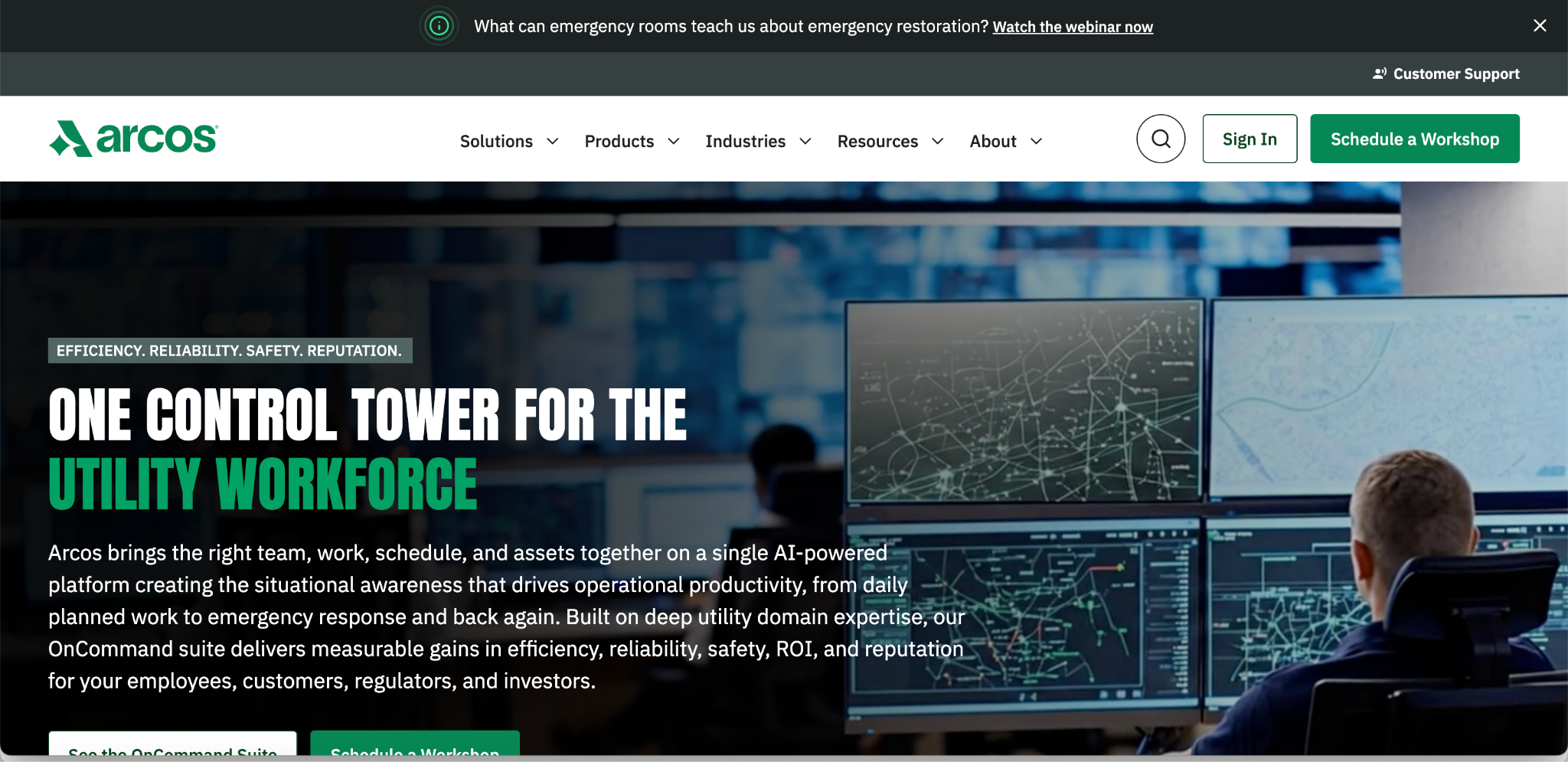
Arcos acquired Clearion Software in October 2024, and the two now operate as one combined platform, GIS-native vegetation management and asset inspection built on Esri's ArcGIS, connected to Arcos's broader workforce and crew management suite.
- Crew Manager tracks every field crew from activation through closeout in one system, with real-time visibility into mutual aid crews during storm restoration
- Clearion's original product specifically handles planning, execution, and documentation of vegetation and inspection work, with configurable risk weighting letting utility teams set their own risk factors and thresholds
- Automated data capture gathers photos, GPS location, notes, and signatures directly from the field, replacing paper maps and work packets
- Positions itself around capturing "verifiable plan-to-closeout evidence" natively, directly supporting the byproduct-documentation concept described earlier in this guide
- Best fit: utilities wanting vegetation management, asset inspection, and broader crew/workforce management under one vendor relationship, rather than separate point solutions for each
2. ACRT Services
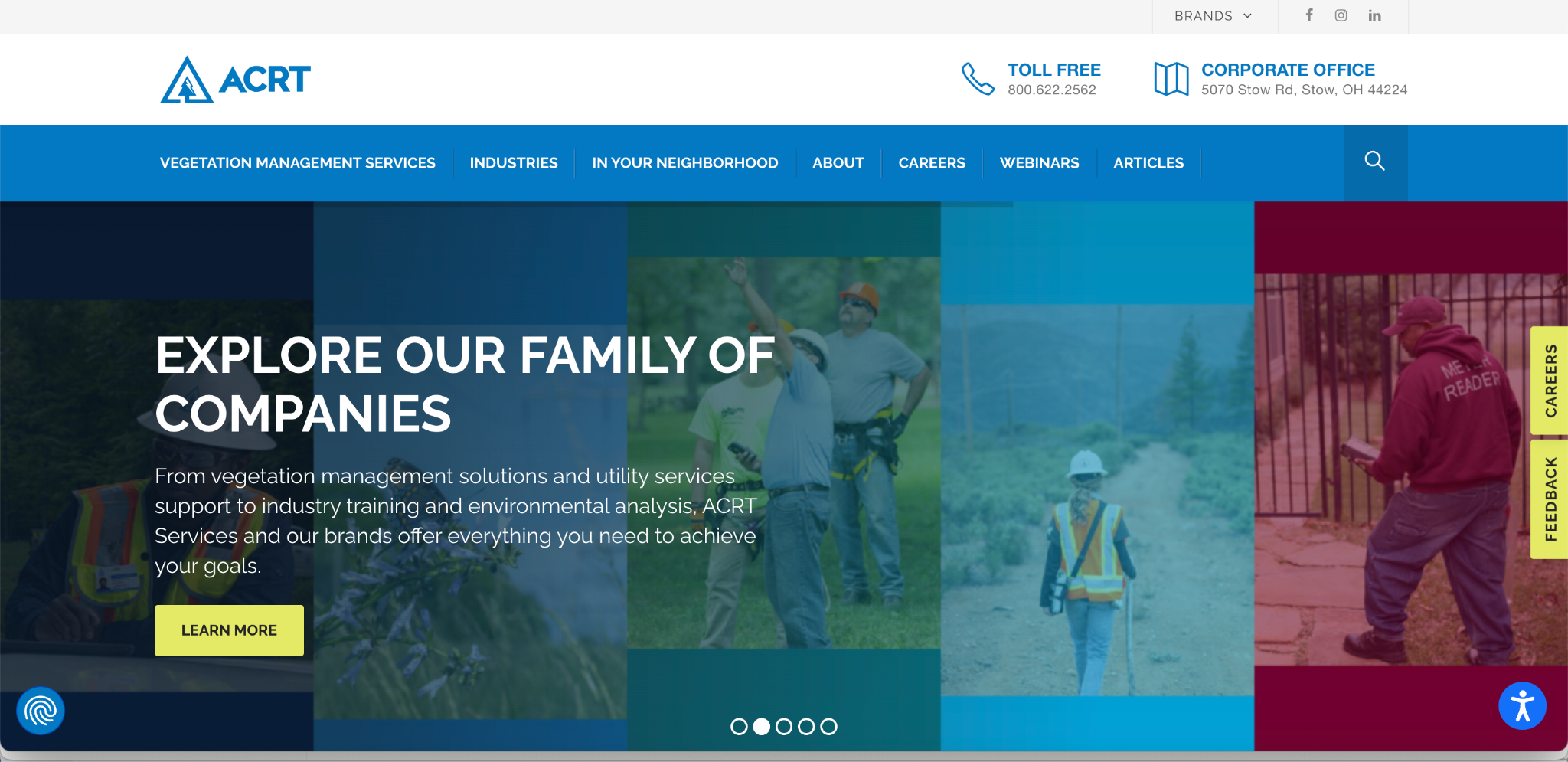
An independent, employee-owned national vegetation management consulting firm founded in 1985, distinct from the software-only vendors above in that it combines proprietary field software with actual consulting foresters performing inspections and managing crews on a utility's behalf.
- States it is the only 100% independent national vegetation management consulting firm, positioning objectivity (no ties to a larger conglomerate) as a core differentiator
- Consulting utility foresters perform tree and brush identification, inspection, and evaluation directly, submitting results with recommendations, and can serve as a utility's field liaison
- Built its own field software in-house specifically to allow customized reporting per utility, since operational needs vary significantly between organizations
- Best fit: utilities wanting vegetation management delivered as a consulting relationship with dedicated field foresters, not just software their own staff operates independently
MSI Data (Service Pro)
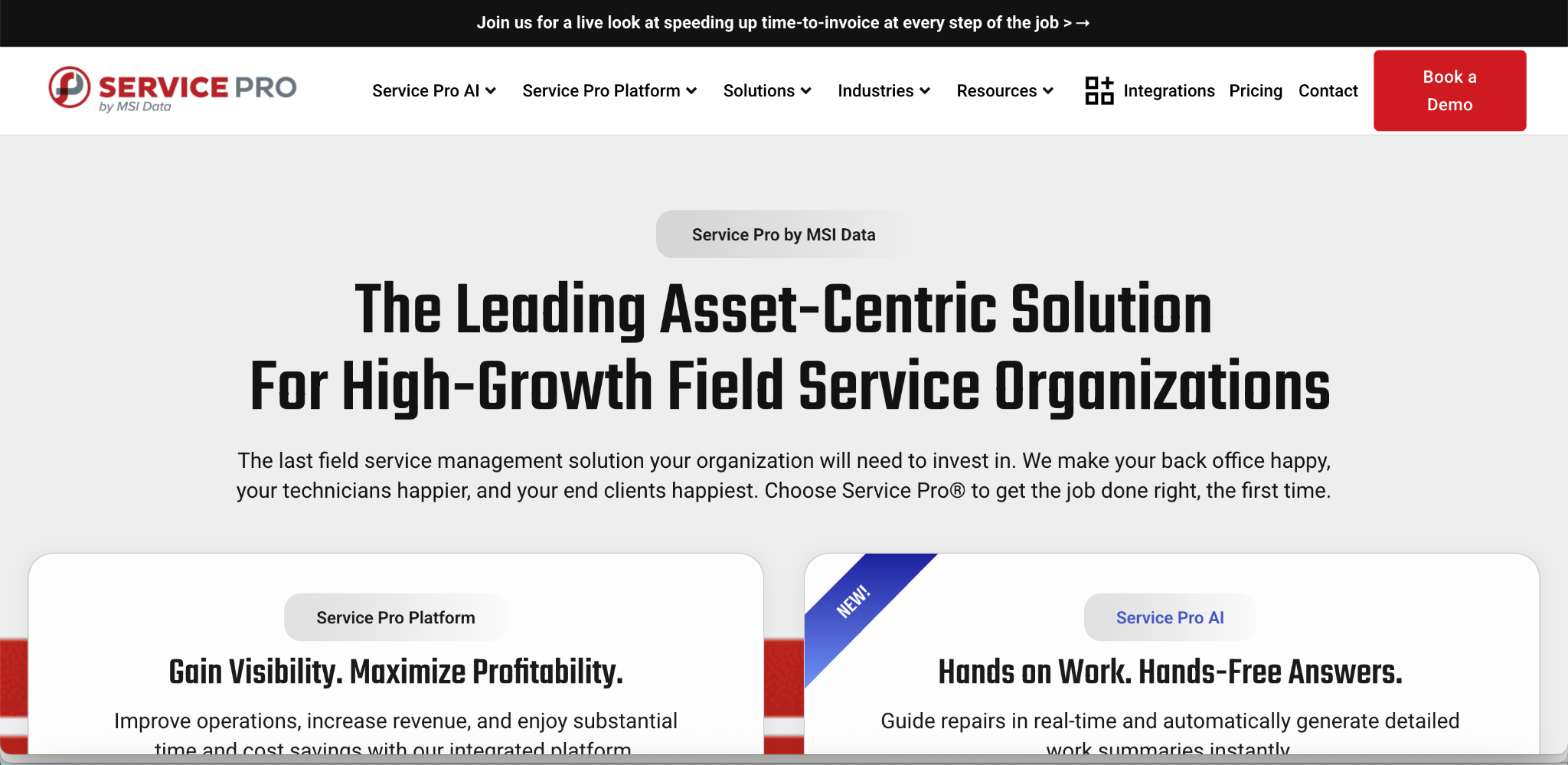
Broader field service management for energy and utilities, covering preventive maintenance scheduling, equipment lifecycle documentation, and mandatory safety and regulatory inspection forms in one platform.
- Automates contract management, scheduling preventive maintenance based on contract terms, equipment runtime hours, or calendar intervals
- Documents complete equipment lifecycles for generators, transformers, meters, and distribution equipment, including warranty tracking
- Best fit: utilities wanting field service management (equipment, maintenance, inspections) as a broader capability alongside document capture, rather than vegetation-management-specific tooling
Where a General-Purpose Extraction API Fits, Narrowly
Worth being precise about scope: none of the platforms above are extraction APIs in the sense a general document processing tool is; they're built around field operations, GIS tracking, and vegetation-specific workflows that a general extraction API doesn't do. The one genuine, non-forced connection is vendor and contractor invoice processing, a real, high-volume category given how much utility field work (vegetation management, equipment maintenance) is contracted out.
DeepRead's published invoice benchmark (97.8% accuracy, measured against named competitors on identical documents against a manually verified ground truth) is relevant specifically to that slice of utility document volume, processing contractor and vendor invoices, not to vegetation risk scoring, work order management, or regulatory filing generation, none of which are things a general-purpose extraction API does. It's a component a utility's internal AP automation might build on, not a substitute for the field-operations platforms above.
Document Automation Use Cases by Industry
Document automation solves a version of the same problem across industries, though what's at stake and which document types matter varies significantly.
Utilities
Vegetation management, right-of-way compliance, and equipment lifecycle records carry safety and wildfire-liability consequences attached to getting them wrong, the focus of this guide.
- Vegetation risk scoring and inspection documentation
- Right-of-way encroachment monitoring and landowner communication logs
- Work orders and equipment lifecycle tracking
Healthcare
Patient intake forms, lab requisitions, and clinical documentation come with strict privacy compliance and genuinely difficult input quality challenges.
- HIPAA-compliant handling built in from the start, not layered on afterward
- Handwriting and fax-quality recognition for routine intake documents
- Field-level provenance for research and clinical data integrity
Insurance
Claims documentation, policy applications, and Certificate of Insurance tracking depend on catching fraud and handling documents that arrive bundled together.
- Multi-document bundle splitting for claims and underwriting packages
- Fraud and alteration detection specific to financial and identity documents
- Confidence-based escalation on fields tied to payout decisions
Construction
RFIs, submittals, drawings, and specifications require constant cross-referencing across revisions to catch contradictions before they reach the field.
- Automated comparison of drawings against specifications and addenda
- Structured routing of RFIs and submittals through approval chains
- Version control across multiple stakeholders (architects, GCs, subcontractors, owners)
Legal
Contracts, discovery documents, and court filings need structural elements to survive automated processing intact, not just accurate character recognition.
- Privilege designation and Bates numbering preservation
- Clause-level extraction of obligations, dates, and parties from long-form agreements
- Citation-backed extraction so a reviewer can verify any flagged value
Banking and Financial Services
KYC documentation and loan files depend on confirming a document is genuine, not just reading what it says.
- Document authenticity and biometric verification, distinct from field extraction
- AML and sanctions screening layered on top of identity confirmation
- Risk-based routing scaling verification depth to customer risk tier
Logistics and Freight
Bills of lading, rate confirmations, and carrier invoices arrive in formats that vary enormously with no shared template across carriers.
- Document-to-load matching so extracted data lands on the correct shipment record
- Handling format variance across a long tail of regional and major carriers
- International and customs document handling with higher accuracy requirements
Utilities sit closer to healthcare and insurance on this spectrum than to a lower-stakes category like general invoice processing; the consequences of an automation error are operational and regulatory, not just administrative.
Conclusion
Document automation for utility companies isn't a smaller version of general business document processing; it's shaped by genuinely elevated stakes: vegetation management and right-of-way compliance carry real wildfire-liability and regulatory consequences, which is exactly why human-in-the-loop review matters more here than in most industries. The strongest approach treats compliance documentation as a byproduct of well-structured, automated field operations, with every data point traceable back to its source, rather than a separate reporting task performed after the fact. Vendor and contractor invoice processing is the one place a general-purpose extraction API fits honestly into this picture; everything else in this category depends on field-operations and GIS-specific tooling a general extraction tool doesn't provide.
FAQ
Why does human-in-the-loop review matter more for utility document automation than other industries?
Because the decisions being documented- vegetation risk scores, right-of-way compliance, safety inspections- carry real safety and regulatory consequences, including wildfire liability. An "AI-assisted, human-approved" workflow keeps engineers and vegetation managers reviewing and approving automated risk scores before they become active work orders, rather than letting an algorithm's output stand alone.
What does "documentation as a byproduct" mean for utility compliance?
It means compliance documentation and rate case evidence emerge naturally from automated field operations with structured data capture built in, rather than being reconstructed as a separate reporting task after the fact. Each data point traces back to a specific source (a timestamped file, a geotagged photo, a signed form), which is what makes the documentation genuinely defensible during a regulatory review.
Is vegetation management really that significant a document automation category for utilities?
Yes, it's the single largest operating expense most electric utilities carry, and it's where the safety and regulatory stakes of getting documentation right (or wrong) are most direct, given the connection between vegetation management and wildfire risk.
What's the difference between Arcos, ACRT Services, and MSI Data? A
rcos (which now includes Clearion, acquired in October 2024) offers GIS-native vegetation management and asset inspection combined with broader crew and workforce management. ACRT Services is an independent consulting firm that pairs proprietary field software with dedicated foresters performing inspections directly. MSI Data (Service Pro) focuses on broader field service management, equipment, maintenance, and inspections, rather than vegetation-management-specific tooling.
Are Clearion and Arcos still separate products I should compare against each other?
No, they're the same company now. Arcos acquired Clearion Software in October 2024, and Clearion's vegetation management and asset inspection capabilities now operate as a product line within the broader Arcos platform, rather than as a competing, independent option. Treat any comparison you find pitting the two against each other as outdated.
More articles

Structured Data Extraction: A Technical Guide
How to extract structured data from documents using an AI API, the architecture, grounding, and named tools compared.

Key Features of AI Document Workflow Automation
AI document workflow automation features, governance, prioritization framework, and real examples with measurable benefits for 2026.